


Abdi Omar’s Top Tips for AAC Awareness Video & Posters
CENMAC’s AAC Consultant Abdi Omar has made a brand new AAC awareness video and posters to help promote AAC awareness in every school!
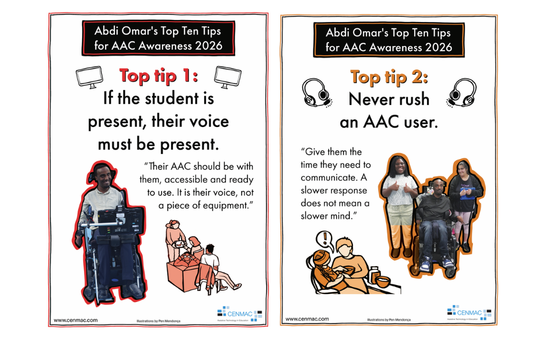
Top tip 1
If the student is present, their voice must be present.
Their AAC should be with them, accessible and ready to use. It is their voice, not a piece of equipment.
Top tip 2
Never rush an AAC user.
Give them the time they need to communicate. A slower response does not mean a slower mind.
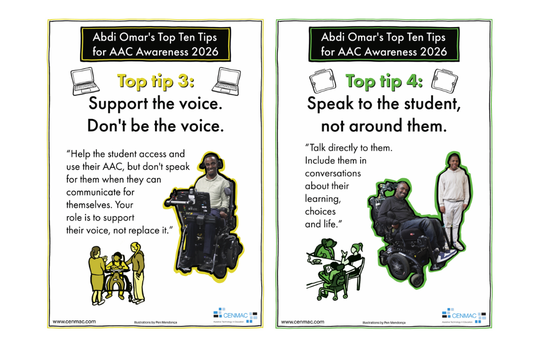
Top tip 3
Support the voice. Don’t be the voice.
Help the student access and use their AAC, but don’t speak for them when they can communicate for themselves.
Your role is to support their voice, not replace it.
Top tip 4
Speak to the student, not around them.
Talk directly to them. Include them in conversations about their learning, choices and life.
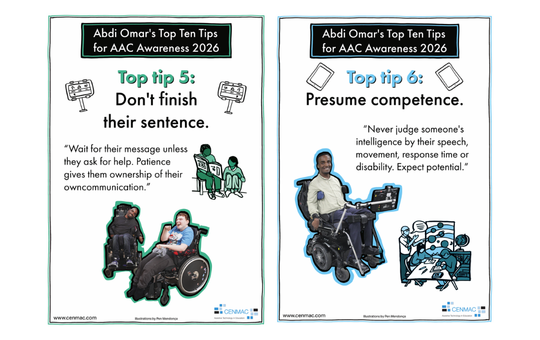
Top tip 5
Don’t finish their sentence.
Wait for their message unless they ask for help. Patience gives them ownership of their own communication.
Top tip 6
Presume competence.
Never judge someone’s intelligence by their speech, movement, response time or disability. Expect potential.
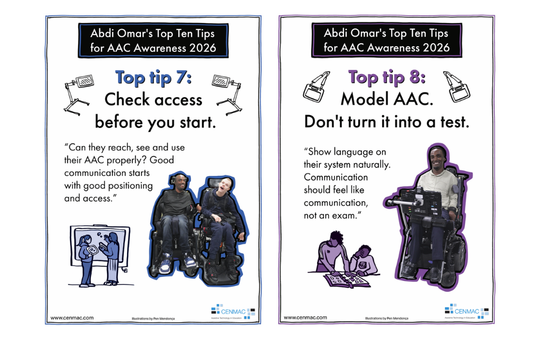
Top tip 7
Check access before you start. Can they reach, see and use their AAC properly?
Good communication starts with good positioning and access.
Top tip 8
Model AAC.
Don’t turn IT into a test. Show language on their system naturally. Communication should feel like communication, not an exam.
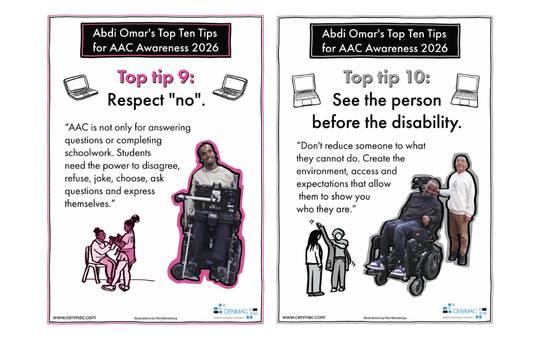
Top tip 9
Respect “No”.
AAC is not only for answering questions or completing school work. Students need the power to disagree, refuse, joke, choose, ask questions and express themselves.
Top tip 10
See the person before the disability.
Don’t reduce someone to what they cannot do. Create the environment, access and expectations that allow them to show you who they are. Abdi Omar, AAC is a voice, not a tool.
Support the voice. Don’t be the voice.
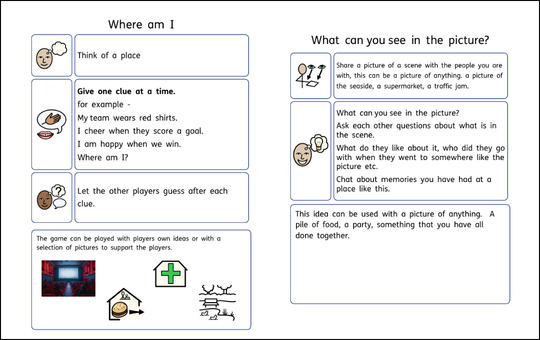
Abdi’s AAC Activity Sheets
Abdi is a fantastic role model and he holds regular AAC lessons with a number of children and young people who are learning to use AAC. Abdi makes learning fun to keep students motivated and engaged.
Abdi has created some activity sheets to help schools learn to use AAC. Teachers and TAs can print the activity sheets out and then use them in the classroom to motivate AAC users.