


October is AAC Awareness Month!
The aim of AAC Awareness Month is to raise awareness about the different ways people communicate and to educate everyone about ways of communicating other than using the spoken voice. The ISAAC theme for 2026 is AAC in Everyday Life: Today, Tomorrow and Beyond #AACaware26.
What is Augmentative and Alternative Communication (AAC)?
AAC helps people to communicate or to communicate more clearly and easily. AAC can be unaided or aided.
Unaided AAC refers to communicating via body language and gestures, facial expressions and sign language such as British Sign Language.
Aided AAC is when someone uses equipment or resources to support their communication and can either be power-based or paper based.
Power-based AAC is assistive technology that uses power to operate a communication device for example an iPad with a communication app installed such as Proloquo.
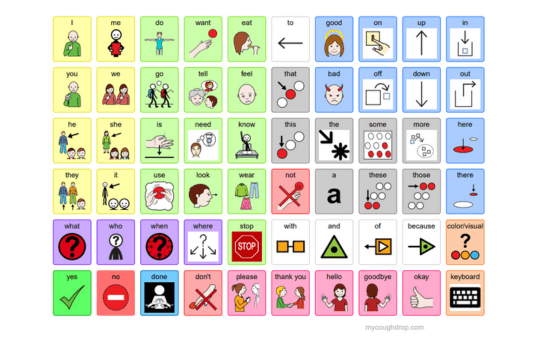
Paper based AAC includes written words, objects, picture symbols or a combination of these things.
We have compiled some resources below to help everyone understand more about using AAC to communicate.
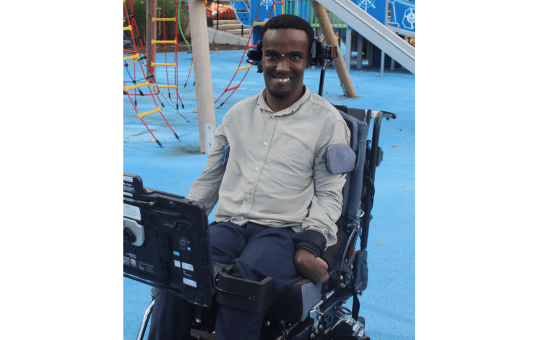
Abdi Omar is CENMAC’s AAC Consultant.
He uses power based AAC to support his communication.
AAC Role Models
Abdi Omar’s Top Tips for AAC Awareness
Abdi Omar is an inspirational speaker and works for CENMAC as an AAC Consultant. Abdi has cerebral palsy and is unable to speak in the usual way. He uses power based AAC to support his communication.
Abdi understands the challenges that come with learning to use AAC, so he is a great role model and a wonderful advocate for the opportunities that being an AAC user can have.
Abdi mentors many other AAC users motivating them with fun and engaging activities.
Abdi shares his Top Tips for AAC Awareness in a video and a series of posters that you can print and put up on classroom walls. He has also created some fun activity sheets to promote AAC use in the classroom.
A Universal Approach to Power-based AAC
Over the last four years CENMAC has piloted the universal approach to power-based AAC in partnership with AssistiveWare at Charlton Park Academy with amazing success. CENMAC works with many schools across London and use a variety of apps and software where increasingly power-based AAC supports teaching and learning via whole groups. In this seminar at Communication Works 2026 AAC user and mentor Abdi Omar talks about how schools can support their AAC users to become confident in using their device and having a voice. He also talks about how schools can support their AAC users by embracing and believing in the technology, by providing constant access to it, by learning to use the technology themselves so they can teach their students, and not being afraid.
Gregor Gilmour – AT Mentor
Earlier this year we were delighted to have Gregor Gilmour as our keynote speaker at our annual event Communication Works where we celebrate assistive technology in education.
Gregor is Co-Manager of the mentoring service ATtherapy and is part of a team of innovative AT mentors who use AAC and support other AAC users in their journeys to be confident, independent communicators.
Gregor was born with athetoid cerebral palsy and has used a communication aid since he was 6 years old. Gregor uses his own lived experience to help others. The position gives him a real sense of purpose as he watches the skills and confidence of his mentees grow.
Watch Gregor’s keynote speech to find out more about his learning and communication journey:

Beth Moulam
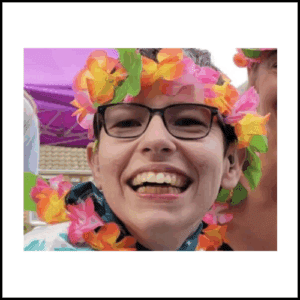
Beth Moulam is a Paralympian, AAC Advocate and lives life to the full celebrating cerebral palsy, speech and hearing impairments and using AAC.
Lee Ridley
Lee Ridley is an English stand-up comedian known as the Lost Voice Guy. Lee uses AAC to communicate. He became a household name when he competed in and won the 12th series of Britain’s Got Talent.
Lee has also written a book called ‘I’m Only In It for the Parking’ published in 2021.
Ellise Hollie Hayward
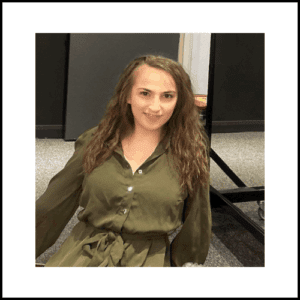
Ellise Hollie Hayward, is a motivational Speaker, Disabilities Correspondent and General Reporter at Jill Dando News, and AAC Ambassador and Inclusion Advocate for The Priory Learning Trust.
FUNctional Switching
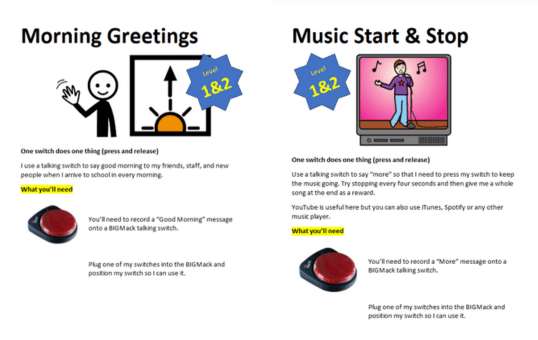
FUNctional Switching is an approach to developing switch skills developed by Charlie Danger in collaboration with CENMAC and Kezia Hesketh at Ace Centre.
The focus of FUNctional Switching is the use of fun activities that encourage engagement with peers and family members while developing switch skills.
The five stages to FUNctional Switching are clear and easy to follow.
Global Symbols
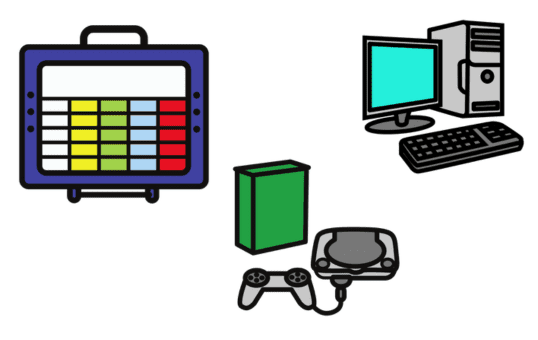
Global Symbols is a useful website where you can create boards to aid communication using thousands of free images from their library. Symbols on this website represent cultures both internationally and closer to home.
Find out more about Global Symbols: Supporting AAC to reflect Language and Culture in Schools at our free Thursday Thirty online training and information session on Thursday 28 November 2024 from 15.30 to 16.00 (GMT).
AAC Literacy
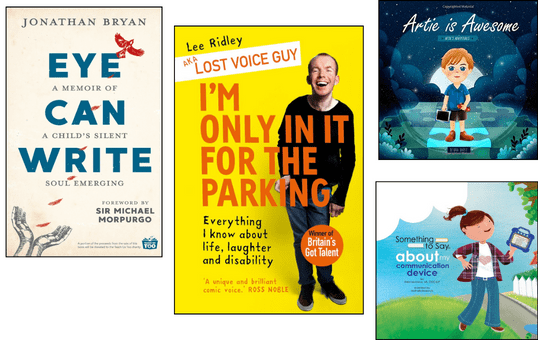
There are some great books written by AAC users including ‘I’m Only In It For the Parking’ by stand-up comedian Lee Ridley (aka Lost Voice Guy) and ‘Eye Can Write: A memoir of a child’s silent soul emerging’ by Jonathan Bryan.
There are also a number of children’s books with characters who use AAC to communicate including ‘Something to Say About My Communication Device’ by Eden Molineux and ‘Artie is Awesome’ by Diedra Darst.
PrAACtical AAC Activities
PraAAtical AAC have a range of free AAC activities to try in a group including familiar board or card games that help to take the focus off the AAC and let the participants focus on communicating and having fun. You can download the activities from their website.